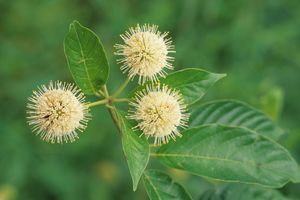
Cephalanthus occidentalis
Buttonbush
Hundreds of ball-shaped, creamy white flowers dangle from the bush in August. Butterflies and insects find the nectar irresistable. The nutlike seeds are eaten by many waterfowl and many types of birds use it as a nesting site. Found in low, wet woods, swamps and along streams and ponds, the Buttonbush is an excellent selection for rain gardens or water garden landscapes.
Additional Information:
Height
3-6 Feet
|
 |
Spread
3-6 Feet
|
|
|
|
Bloom/Seasonal Color
White
|
USDA Hardiness Zone 5-10
Home Owner Growing and Maintenance Tips:
Plant in a naturalized areas along streams or ponds or grow in a shrub border with moist soil. Attracts butterflies and provides food and nesting sites for birds.
Characteristics & Attributes
Hydrologic Designation
|
Nature Attracting
| • |
Butterfly |
| • |
Beneficial Insects |
| • |
Songbird |
|
Season of Interest
|
Soil Moisture
|
Special Uses
|
Sun Exposure
| • |
Full Sun |
| • |
Medium Sun/Average Shade |
|
USFS MO Ecological Map
|
Wildlife Benefit
| • |
Butterfly Nectar |
| • |
Food/Birds |
| • |
Nesting |
| • |
Cover |
| • |
Food/Small Animals |
|